

A Closer Look: Common Equine Eye Conditions
A Closer Look: Common Equine Eye Conditions
There are few things that catch a horse owner’s attention faster than a squinting, tearing, or suddenly cloudy eye - and for good reason.
Eye issues in horses are not only uncomfortable, they can progress quickly and have lasting effects on vision if not addressed promptly. Horses are particularly prone to eye problems simply because of the size and position of their eyes, which makes them more vulnerable to trauma and environmental irritation.
The good news? With early recognition and appropriate care, many common conditions can be managed very successfully.
Let’s take a look at some of the most common equine eye conditions we see in practice.
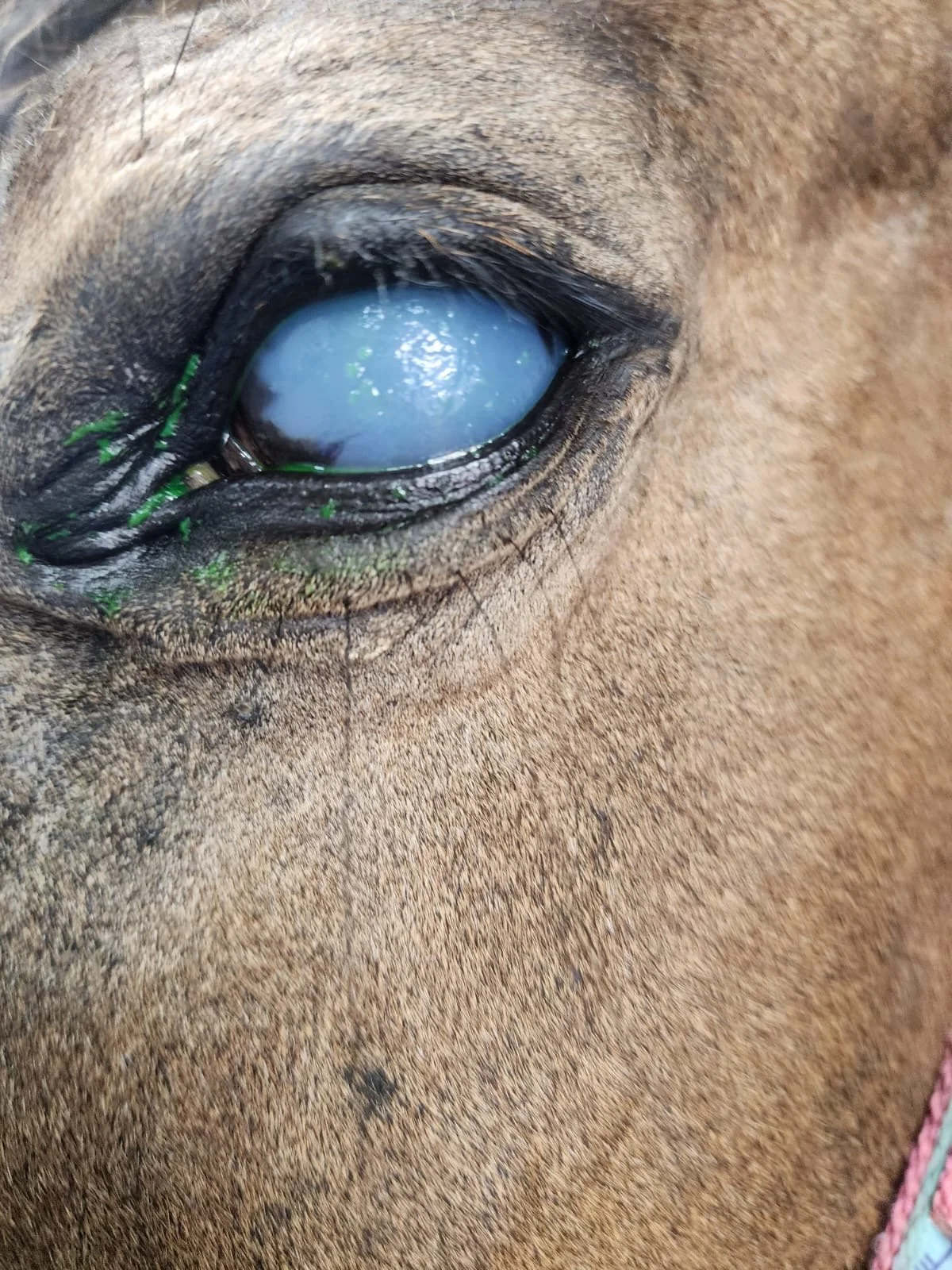
Corneal Ulcers
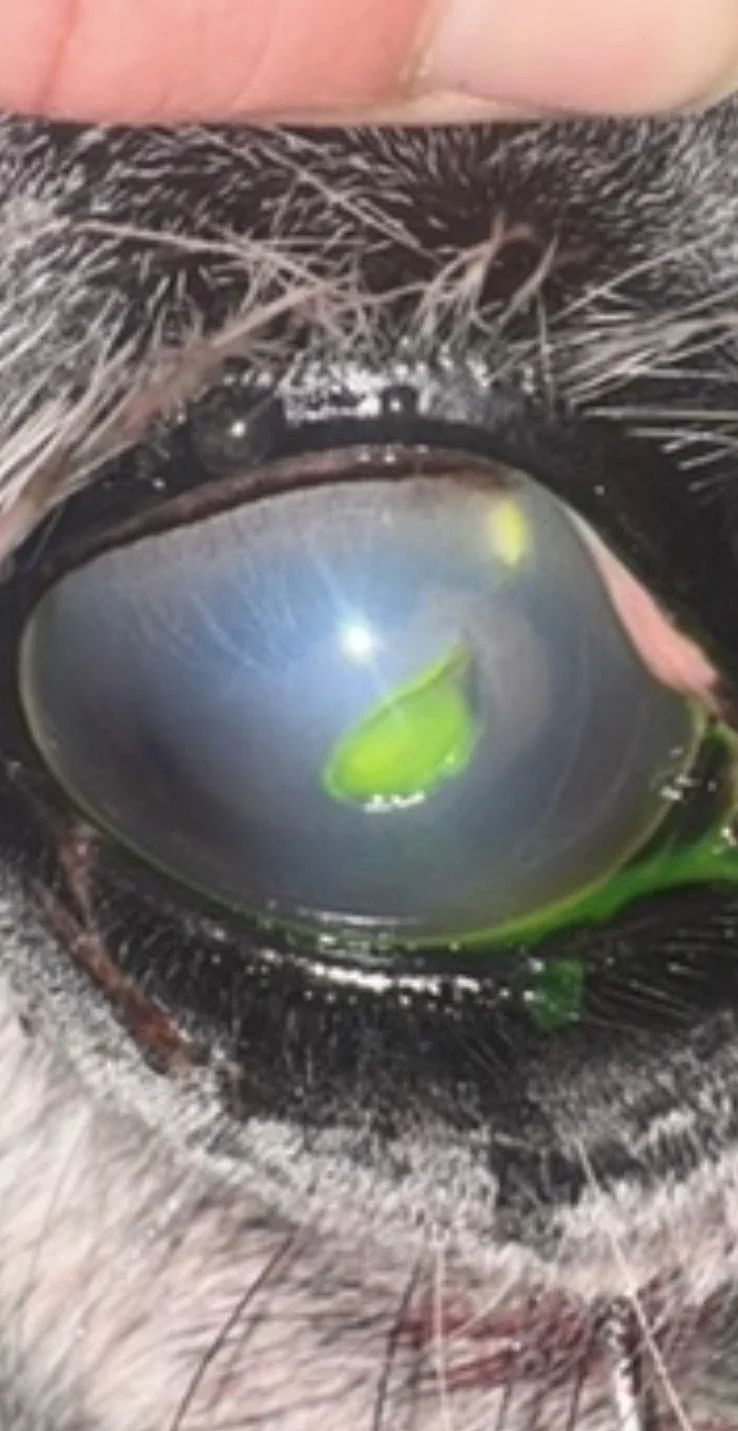
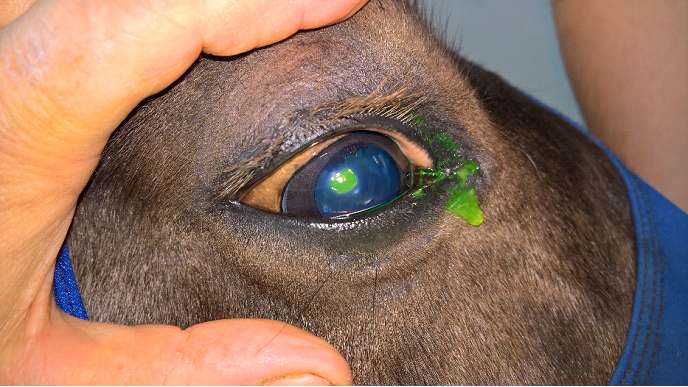
Corneal ulcers are one of the most common eye issues in horses and are often caused by trauma—think a stray piece of hay, a branch, a pasture mates tail to the face, etc.
What you might notice:
Squinting or holding the eye closed
Excess tearing
Sensitivity to light
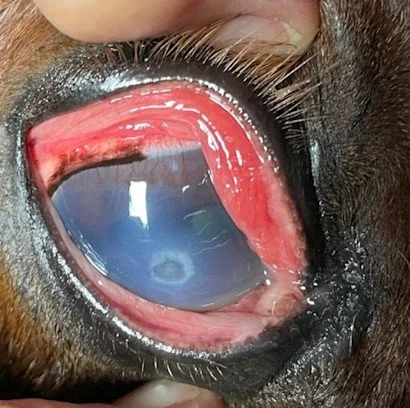
A cloudy or bluish appearance
Even minor ulcers can rapidly become serious if infection sets in, so these are always worth a prompt call to your veterinarian.
Conjunctivitis: Fly Season = Eye Season.
Conjunctivitis refers to inflammation of the tissues lining the eyelids. It’s commonly triggered by dust, flies, environmental irritants, or infection.
Signs include:
Redness
Swelling
Watery or mucoid discharge
Squinting or holding the eyelid closed.
Treatment is dependant on the irritant - and can be as simple as removing the environmental factor, like adding a fly mask or controlling dust. While often mild, conjunctivitis can sometimes be secondary to other issues, so it’s important not to assume it’s “just irritation" if the problem doesn't immediately improve.
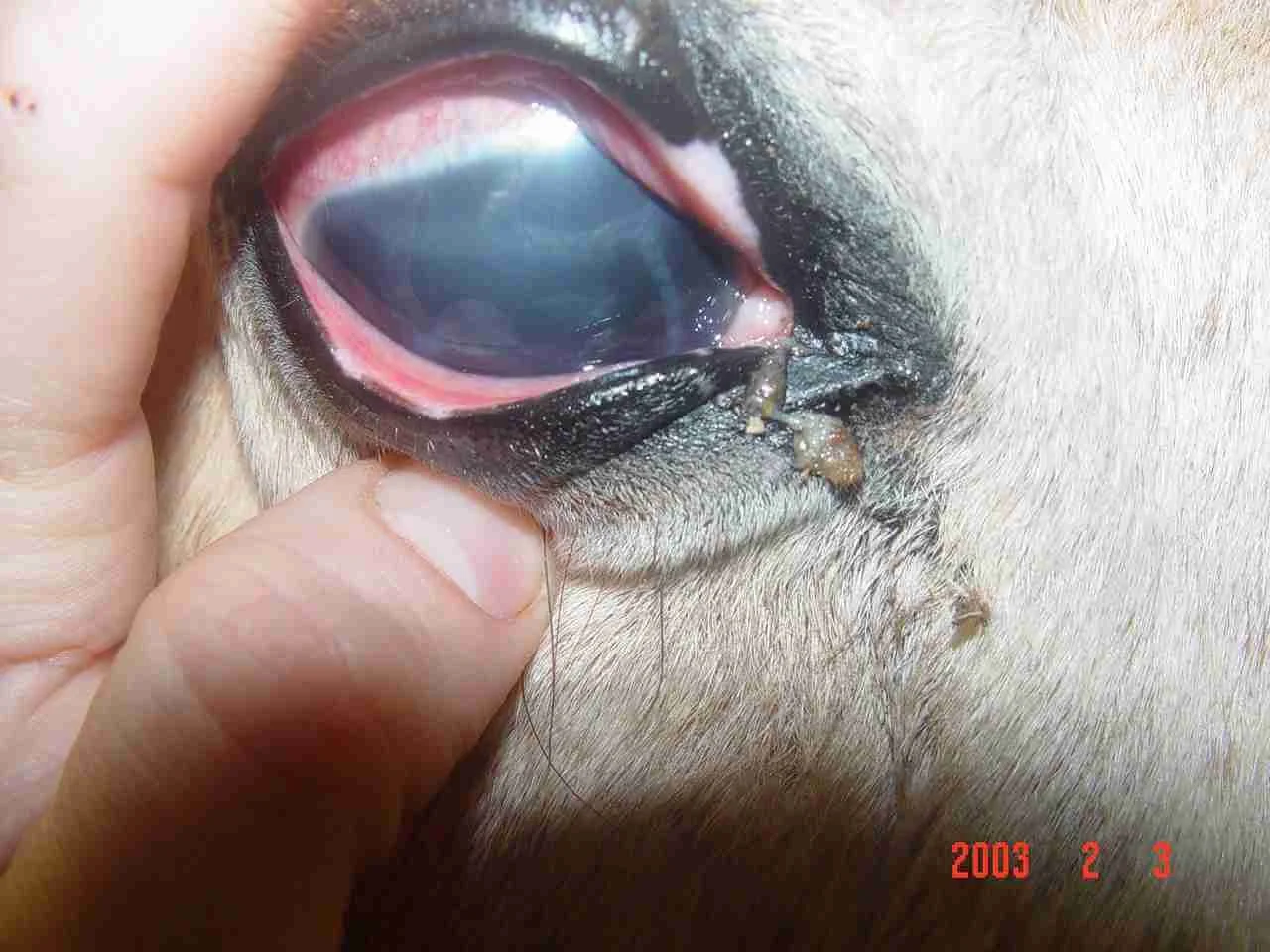
Equine Recurrent Uveitis (ERU):
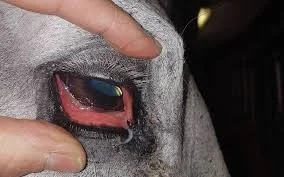
Equine Recurrent Uveitis, sometimes called “moon blindness”, is one of the most significant eye diseases we see in horses.
This condition involves repeated episodes of inflammation affecting the structures inside the eye.
Common signs:
Squinting and tearing
Cloudiness/blue tint of the cornea
A smaller (constricted) pupil
Sensitivity to light
Management often requires ongoing care and close monitoring to preserve comfort and vision. Without treatment, this condition can be very painful and cause permanent damage/blindness.
Tumours and Other Conditions
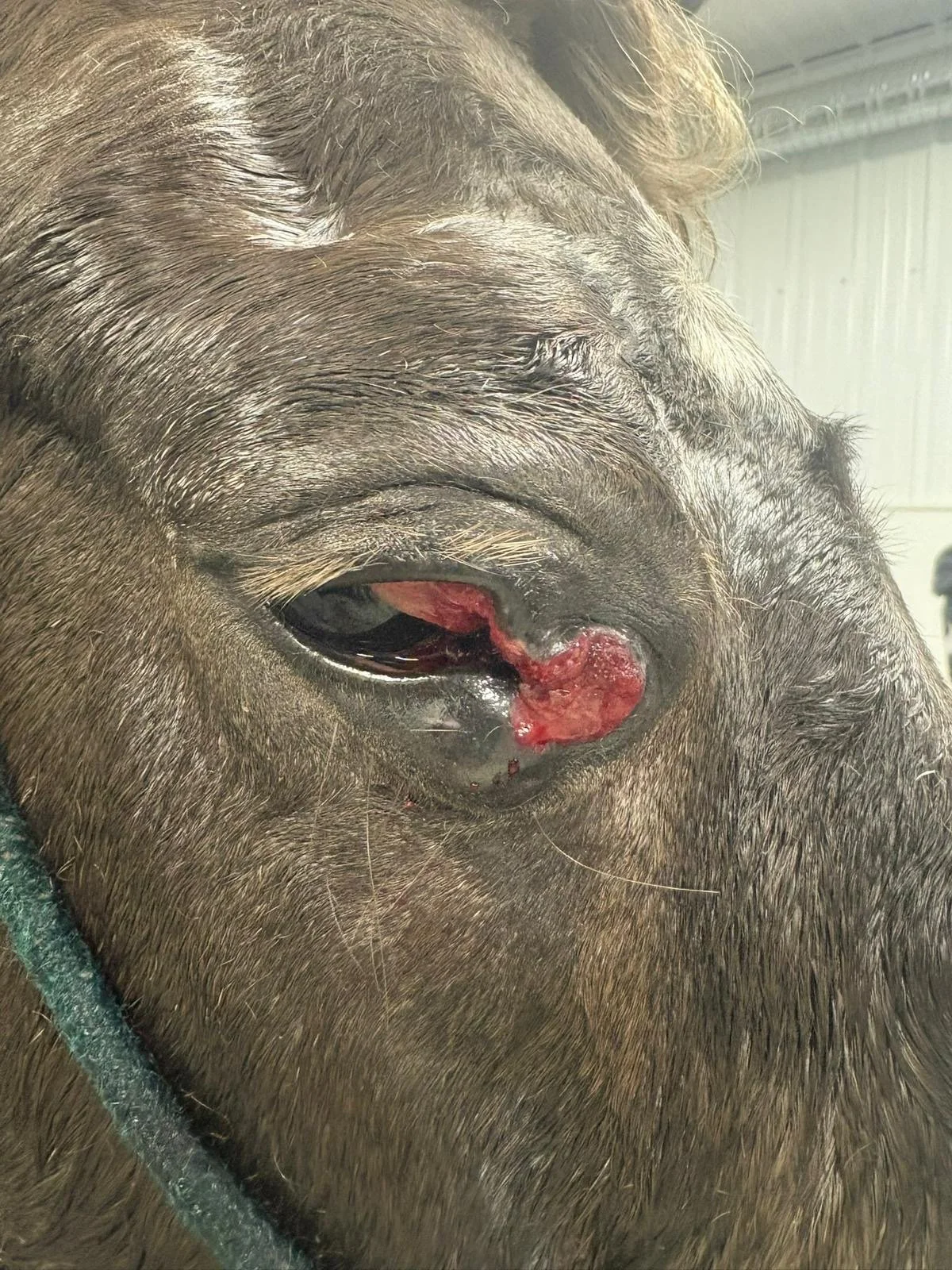
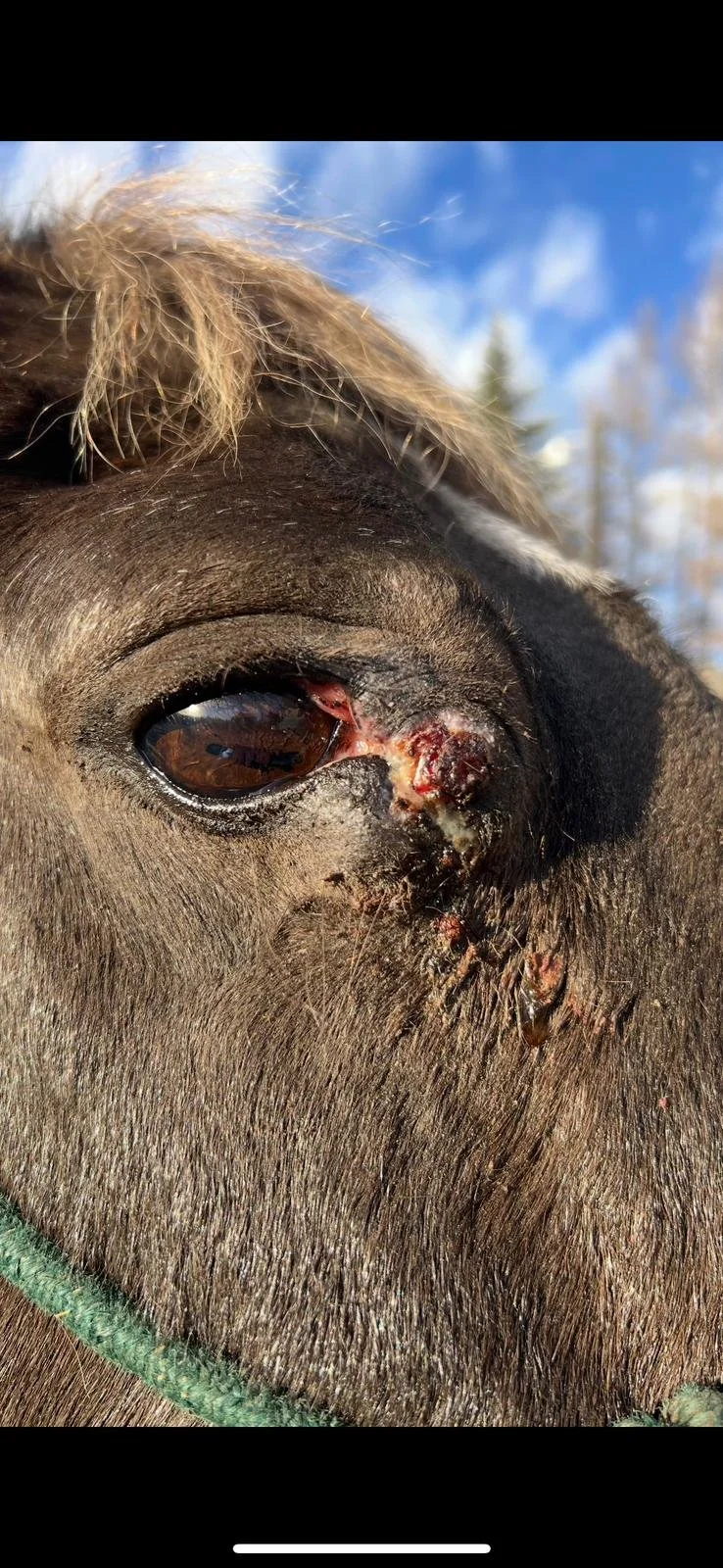
Although less common, conditions such as squamous cell carcinoma can affect the eye and surrounding tissues.
These may appear as:
Masses or growths on the eyelid or around the eye
Persistent irritation or discharge
Changes in pigmentation or tissue appearance
Early diagnosis is key, as treatment outcomes are best when these are addressed sooner rather than later.
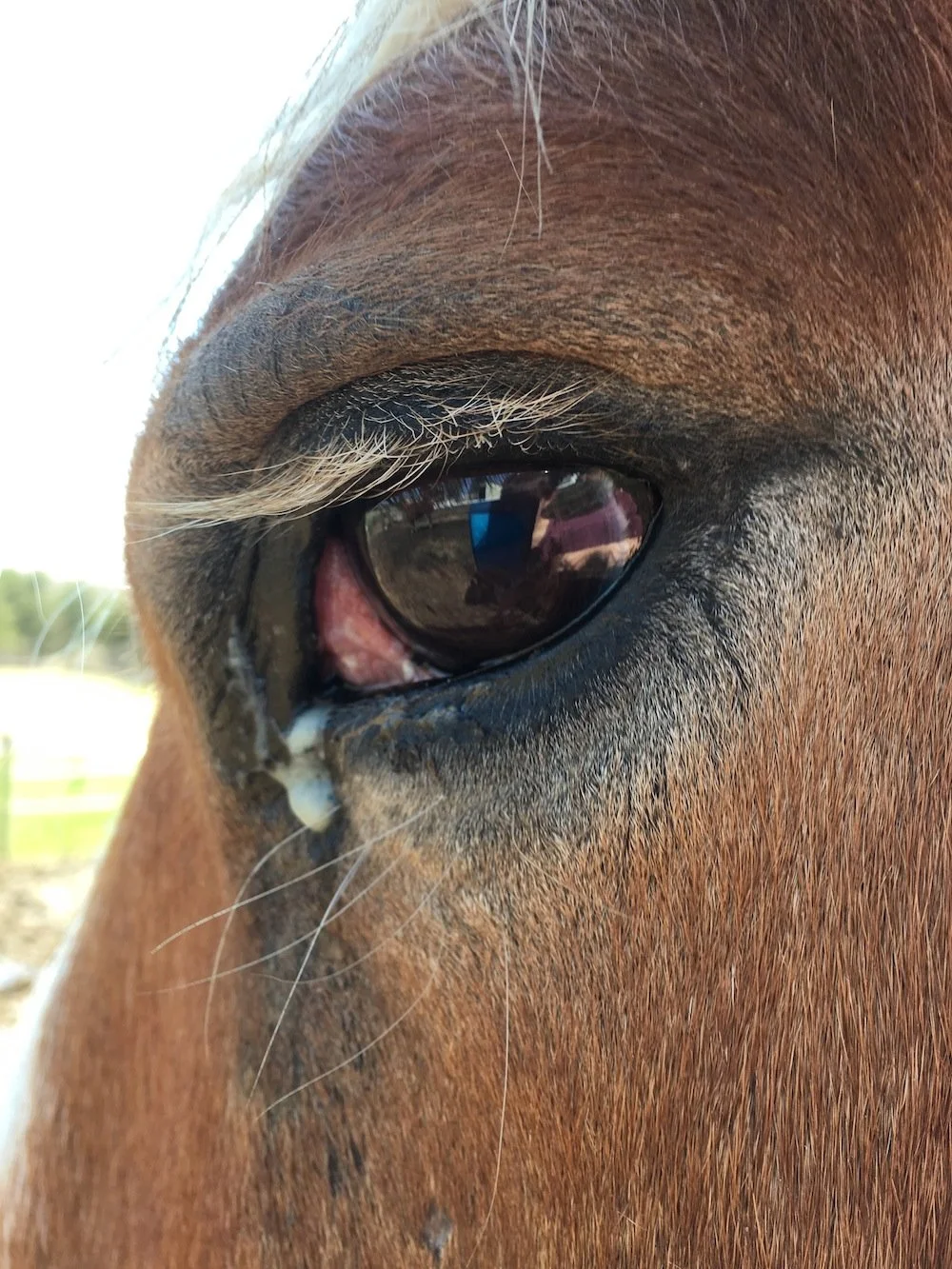
So, What Should You Watch For?
Eye issues don’t always present dramatically at first, but they can escalate quickly and progress rapidly - threatening vision. The quicker we can assess an issue and start treatment, the higher chance of treatment success. Therefore, they should always be treated seriously in horses. As an owner, keep an eye for any of the following signs that should prompt a call:
Squinting or holding the eye closed
Excess tearing or discharge
Redness or swelling
Cloudiness or color changes
Sensitivity to light
If there’s one takeaway, it’s never wait on an eye issue.
What may look minor in the morning can become much more serious by evening. When in doubt, it’s always better to have it examined early.
Your horse relies on you to notice the small changes—and when it comes to their eyes, those small changes matter.